

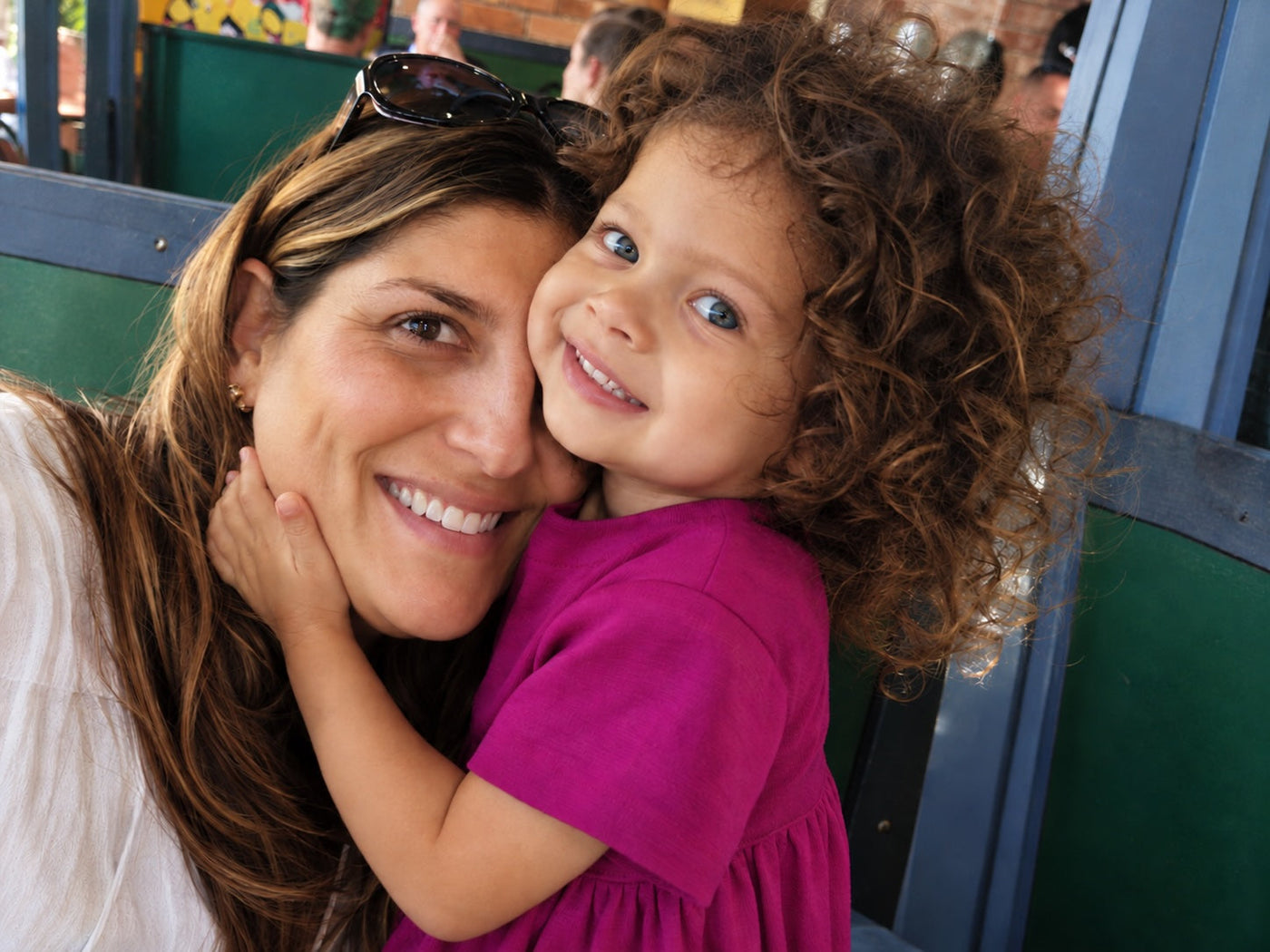
Most of what you learned about hair growing up works against your child’s curls. Brushing every day, washing every night, smoothing every flyaway. None of it is wrong. It just wasn’t written for your child.
I’ve been a hairstylist for more than 25 years, and I’ve worked with every texture you can imagine. As a mother and a professional who has spent decades understanding hair, I know that caring for curls isn't necessarily complicated. It's simply different. But I also know that for parents who grew up with straight hair, learning to care for a child's curls can feel like learning an entirely new language. And that's okay. You don't need to become a hairstylist to understand your child's hair. You just need to know what makes it different and what it needs to thrive.
Why Kids Curly Hair Needs a Different Approach

Curly hair isn’t straight hair that misbehaves. It’s built differently. Each strand bends and twists as it grows, which is why curly hair tends to be more prone to dryness and tangling than straight hair.
Natural oils from the scalp also have a harder time traveling down a curl than down a straight strand. So the ends of your child’s curls are often thirsty, even when the scalp is clean.
Once you understand that, everything else makes sense. Curly hair care isn’t about control. It’s about moisture, gentleness and patience.
How Often Should You Wash Your Child’s Curly Hair?
Probably less often than you think. Curly hair can be more prone to dryness, so finding the right balance between cleansing and maintaining moisture is important. For many curly kids, washing once a week works beautifully, while others may need more frequent washing depending on their scalp, activity level and hair texture. The American Academy of Dermatology notes that children with dry, curly hair often need shampoo less frequently than children with oily, straight hair. You can read their guidance here (https://www.aad.org/public/parents-kids/healthy-habits/parents/wash-hair).
Between wash days, a quick refresh is often all you need. If there’s banana in their curls or sand from the playground, a rinse with water and a little conditioner may do the job. But if their scalp is sweaty, itchy or has product buildup, it's time for a proper wash.
When you do shampoo, choose a gentle cleanser that cleans effectively without leaving the hair feeling stripped. Our Shampoo Dreams (https://reigncurls.com/products/shampoo-dreams) was made for exactly this: a clean, gentle wash that respects your child’s curls.
For a full step by step routine, read A Wash Day Routine That Actually Works For Your Child’s Curls (https://reigncurls.com/blogs/curl-academy/wash-day-routine).
How to Detangle Kids Curly Hair Without Tears
This is the question I hear most from parents. Detangling doesn’t have to end in tears, for your child or for you. A few changes make an enormous difference.
Detangle with moisture, not force
For most curly and coily hair, detangling is easiest when the hair is wet and coated in conditioner. Conditioner gives the strands slip, so knots can slide apart instead of being pulled or snapped. Wet hair can also be more fragile, so the key is to work gently and never force a brush through a tangle.
Start at the ends and work up
Never start at the roots. Hold a small section, begin at the very ends, and gently work your way up toward the scalp. Starting at the bottom means you’re only ever working through a small knot at a time, instead of dragging a comb through the whole length.
Use your fingers first
Before any tool touches your child’s hair, use your fingers to gently separate the bigger tangles. Then follow with a wide tooth comb or a detangling brush made for curls. Fingers can feel a knot in a way a comb never will. If you come across a stubborn tangle, add a little more conditioner rather than pulling harder.
Work in sections
Divide the hair into four or more sections and clip each one away as you finish. It feels slower, but it’s faster in the end, and it keeps you from going back over hair that’s already done.
Make it a moment, not a battle
Hair time is connection time. Put on their favorite show, read a story, or let them detangle a doll’s hair while you do theirs. Keep sessions short when you can. A child who feels safe in your hands learns that their hair is something to care for, not something to fear.
Moisture Is the Whole Game

If you remember one thing from this guide, remember this: curly hair thrives on moisture.
After every wash, follow with conditioner. Never skip it. Our Conditioning Clouds (https://reigncurls.com/products/conditioning-clouds) is a lightweight conditioner that adds moisture without weighing curls down. Then, while hair is still damp, apply a leave in product to help maintain softness and moisture. Our Magical Leave In Cream (https://reigncurls.com/products/magical-leave-in-cream) conditions and provides light curl definition in one step, so you’re not juggling five bottles on a busy night.
A few more moisture habits that help:
Apply products to damp hair. Applying a leave in product while the hair is still damp helps distribute it evenly and maintain softness.
Skip the rough towel. Gently squeeze water out with a soft cotton shirt or microfiber towel instead of rubbing.
Let curls air dry when you can. Excessive heat can contribute to dryness and damage.
Not every product works the same way on every child. Hair porosity, strand thickness, density and texture can all influence how a product performs. If you’ve ever bought a product that worked beautifully on another child and did nothing for yours, read Porosity, The Missing Piece Every Curl Parent Needs To Know (https://reigncurls.com/blogs/curl-academy/understanding-porosity).
Baby Curly Hair and Toddler Curly Hair: What Changes as They Grow

Baby curly hair
If your baby’s curls look different from week to week, that’s normal. Baby hair often changes as it grows in, and it can take a couple of years for your child’s texture to become more established. Some babies start with straight hair that turns curly, and some start curly and loosen over time.
For babies, keep it simple: a gentle cleanser appropriate for their age and very soft hands. Their hair and scalp are delicate, so less is more. Most babies don't need a complicated routine or additional styling products.
Toddler curly hair

Toddlers bring new challenges: more hair, more food, more rolling around on every surface. This is the age when tangles really show up. Use the detangling steps above, and rely on quick refreshes between wash days when the scalp doesn't need cleansing.
This is also a wonderful age to start teaching. Let your toddler squeeze conditioner into their own hands, or scrunch their curls with you. Children who help care for their hair grow up feeling ownership of it.
Big kids
As your child grows, their hair may keep changing in thickness and curl pattern. That’s why it helps to understand the full picture of their hair, not just a curl number. Find Your Curl Type, and Why It Is Just the Beginning (https://reigncurls.com/blogs/curl-academy/find-your-curl-type) walks you through it.
Protect Curls While Your Child Sleeps
A lot of frizz and tangling happens overnight. Friction against traditional cotton pillowcases can contribute to tangles and frizz. A satin or silk pillowcase, or a comfortable satin lined bonnet for older kids, can help reduce friction and keep curls smoother until morning. For longer hair, a loose braid or puff at bedtime cuts down on knots.
The Words Matter as Much as the Products

Here’s the part no product label will tell you. The way we talk about our children’s hair becomes the way they talk about themselves.
A child who hears “your hair is so hard” or “we need to tame this” learns that something about them needs fixing. A child who hears “let’s take care of your curls” learns that they are worth caring for. Healthy hair is the goal. Perfect hair was never the point.
Your child’s curls are not a problem to solve. They are a crown.
Quick Answers for Curly Hair Parents
Should I brush my child’s curly hair every day? No. For most curly and coily textures, daily dry brushing isn't necessary and can contribute to frizz and breakage. Detangle gently with moisture and conditioner, starting from the ends.
How often should I wash my toddler’s curly hair? For many curly toddlers, shampooing about once a week works well, although some need more frequent washing depending on their scalp, activity level and hair texture.
What products do kids with curly hair need? A gentle shampoo, a conditioner, and an age appropriate leave in moisturizer cover the basics for most children.
Why is my child’s curly hair always dry? Curly hair can be more prone to dryness because natural scalp oils don't travel as easily along the hair shaft. Gentle cleansing, regular conditioning and a good leave in product can help. Hair porosity and product buildup may also influence how the hair responds to moisture.
Will my baby’s curly hair stay curly? It may change. Baby hair often shifts in texture during the first couple of years, so the curls you see now may tighten or loosen.
Start With One Change
You don’t have to overhaul everything tonight. Pick one change, like detangling with more conditioner or finding a wash schedule that works better for your child, and see how their curls respond. Small, loving steps add up.
When you’re ready for a complete routine, The Full Crown Set (https://reigncurls.com/products/the-full-crown-set) brings together Shampoo Dreams, Conditioning Clouds and Magical Leave In Cream in one clean set.
Every curl is a crown. Teach them that before the world tells them otherwise.